

Buy Now, Pay Later in Malaysia: Convenient Spending or Hidden Cash Flow Trap?
Key Takeaways
- Buy now, pay later in Malaysia has grown to RM5.3 billion in outstanding balances across 8 million active accounts as of Q1 2026, per a statement issued by Malaysia’s Finance Ministry.
- Around 40% of BNPL users in Malaysia are under 30. The average transaction is below RM100, used mainly for groceries, food, and transport, not big-ticket items. They are financing everyday spending.
- The real risk is not one large bill. It is five or six small instalments running at the same time across different platforms, quietly eating into your monthly budget without you noticing.
- Under the Consumer Credit Act 2025, in force since 1 March 2026, missed BNPL payments now affect your credit record the same way a missed loan payment would.
- Buy now, pay later in Malaysia is convenient, right up until you realise how much of your income is already committed before the month even starts.
Introduction
Eight million Malaysians are actively using BNPL. The outstanding balance hit RM5.3 billion in Q1 2026, up from RM4.9 billion three months earlier. Size of a typical transaction? Under RM100.
That last part is important. Because when people picture BNPL debt, they imagine someone financing a new phone or a designer bag. The reality is much more everyday spending: groceries, Grab rides, a subscription service. Each one feels completely manageable. The real question is whether convenient spending stays convenient, or quietly becomes a trap.
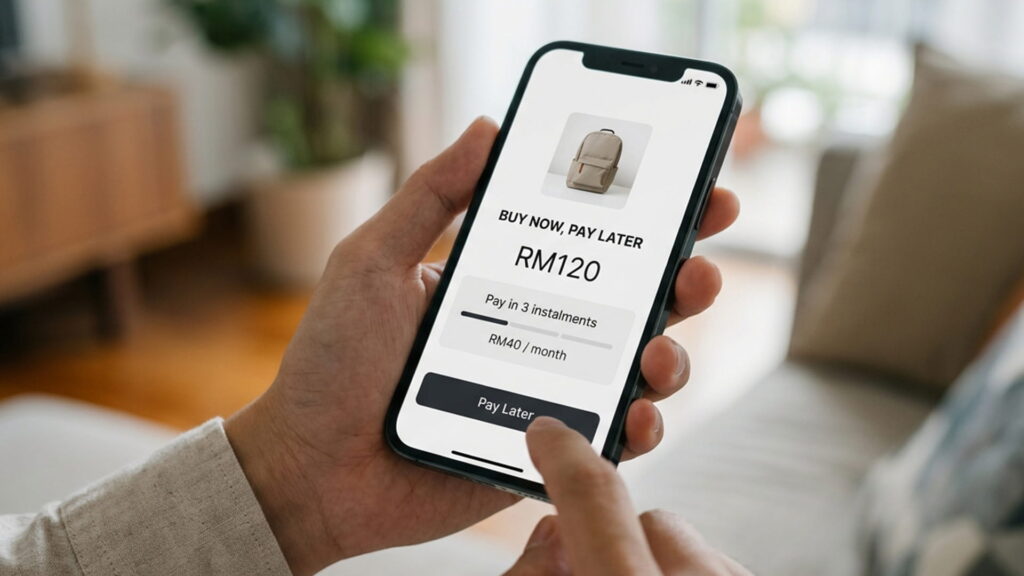
What BNPL Actually Looks Like in Practice
Say you split a RM90 grocery run on Atome. Then a RM120 Shopee order on SPayLater. A RM60 transport reload on GrabPayLater. Separately, each instalment is, what, RM20 to RM40 a month? Easy to absorb.
Now run five or six of those at the same time. Suddenly you have RM200 to RM300 draining out in small amounts every month, spread across different apps with different billing dates. None of it shows up on your salary slip. That is the blind spot that catches people off guard. None of it is captured in your bank’s fixed commitment list. And because each amount is so small, it is easy not to notice the total is adding up.
A March 2026 parliamentary reply confirmed that BNPL debt in Malaysia sits at roughly 0.3% of total household debt, which sounds reassuring at a national level. But that number does not capture what it feels like when five BNPL instalments land in the same week as rent and utilities. Nationally, it is contained. For the household with five BNPL instalments due this week, the timing is what gets them.
Is BNPL a Tool or a Trap? It Depends on Why You Are Using It
Ask yourself this: are you using BNPL because it is convenient, or because the purchase genuinely cannot fit in this month’s budget?
If you have the cash and just prefer to spread the cost, that is fine. BNPL is basically a free instalment plan.
If the purchase genuinely cannot fit this month’s budget, then it means you are borrowing to consume. Research on Malaysian BNPL users found that around 73% come from lower-income groups, and for many, BNPL fills a real timing gap. But it does not change the maths. If income is not enough for expenses, BNPL only gives you more time to pay. It does not fix the shortfall of resources.
This is exactly what tends to surface when someone in Malaysia sits down and looks at their full spending picture for the first time.

What Changed With BNPL Regulation in 2026
Until recently, BNPL operated in a grey area. Providers were not required to check whether you could actually afford what you were buying, and your BNPL history did not show up in your credit records.
That changed on 1 March 2026 when the Consumer Credit Act 2025 came into force. For the first time, BNPL in Malaysia had a proper regulator. BNPL providers now need to run creditworthiness checks before approving financing, and they must report consumer credit data to credit reporting agencies like CTOS.
What this means practically: if you miss a BNPL instalment on a RM90 grocery split, that can now show up on your credit record. And it can affect a home loan application the same way a missed personal loan payment would. The “it is just a small purchase” framing no longer applies to how lenders will read your credit history.
How BNPL Quietly Disrupts Your Cash Flow
The tricky part about BNPL, especially for cash flow planning in Malaysia, is that it sits completely outside the usual financial tracking structures. It does not show up on your payslip. Your bank does not automatically capture it as a committed monthly outflow. And unlike a credit card, there is no single statement that totals all your BNPL obligations across providers.
So people end up with a blind spot. They know roughly what their rent, utilities, car loan, and EPF deductions look like. They have no clear picture of what their total BNPL commitment is across three or four different apps.
The fix is simple, even if it requires a bit of manual effort: once a month, open every BNPL app, note the remaining instalments, and total them up. That figure is money that has already left your budget, even if it has not cleared your account yet. Treat it as a fixed commitment before deciding how much discretionary spending you actually have left.
If that total is creeping above 10% of your monthly take-home, the pattern is telling you something about your financial behaviour that your bank statement alone will not.
When You Should Actually Be Concerned
BNPL is not a problem for everyone. But a few situations are worth looking at more closely.
Firstly, if you are relying on deferred payments for everyday essentials like buying groceries, food, or regular utility bills, this could be an indication of a lack of cash flow and potential financial distress rather than smart budgeting.
Also, if you are going to apply for a loan for a major purchase such as a house or a car, make sure you are clearing your BNPL balances on time. Missed payments now show up under the Consumer Credit Act 2025 and can affect your loan eligibility.
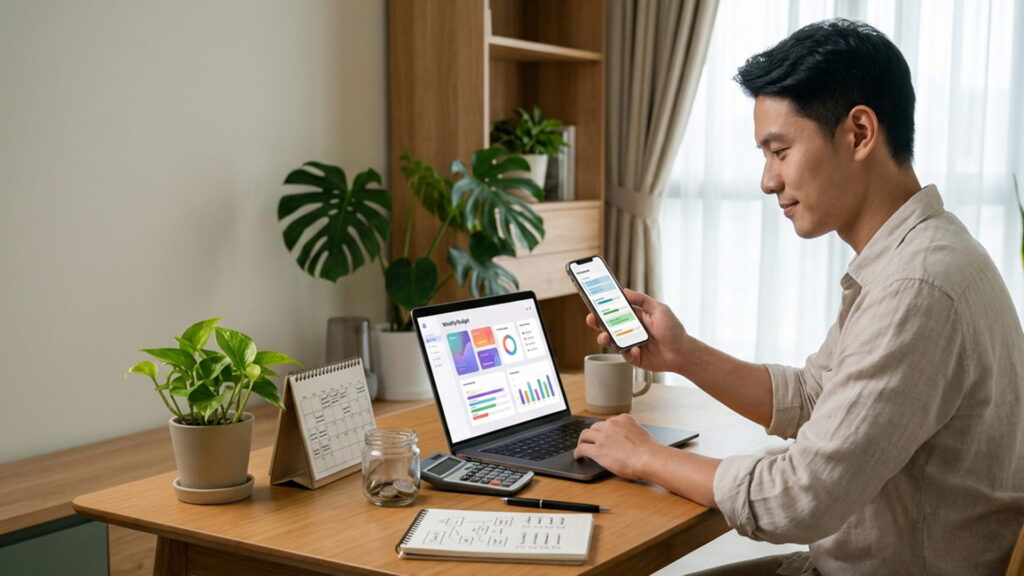
How to Manage BNPL Better
First off, the best way to use BNPL is as a convenience tool. When you want to use it, ensure that you already have the money in your bank account and you can pay it off immediately if required. If you do not already have the money, then you cannot afford the item. It is very dangerous to use BNPL to spend money that you do not already have.
Next, tracking your BNPL commitments helps you to manage your instalment payments better. This ensures you have a more complete picture and enables you to set aside enough money to pay off the instalments. Use a spreadsheet or money app to log future deductions so you never lose sight of your total owed balance.
Another way to keep your BNPL installments in check is to set a spending cap. We recommend keeping your total BNPL obligations under 10% of your monthly take-home income.
Also, to prevent missing out on your BNPL commitments, you can consider paying in advance whenever you have spare money. Some BNPL providers also provide additional benefits when you pay ahead.
If you are struggling with your BNPL payments, a financial adviser can help you professionally assess your financial situation and advise you whether BNPL in Malaysia is working for you or against you.
Frequently Asked Questions
1. Is BNPL in Malaysia a convenience tool or a hidden cash flow trap?
Frankly, it all depends on how you use it. BNPL is convenient when you have the money and are just spreading the cost for flexibility. It becomes a trap when you are using it because you cannot actually afford the purchase this month, and then layering more BNPL on top in the months that follow. The trap is not any one transaction. It is the pattern. That is what makes the pattern worth understanding.
2. How does BNPL affect my credit score in Malaysia?
Since the Consumer Credit Act 2025 came into force in March 2026, BNPL providers must report repayment data to credit reporting agencies. A missed payment can now appear on your credit record and can affect loan applications.
3. How much do Malaysians owe in BNPL debt?
RM5.3 billion across 8 million active accounts as of Q1 2026. BNPL in Malaysia has an overdue rate of 3.4%, representing roughly 0.3% of total household debt.
4. What did the Consumer Credit Act 2025 change for BNPL users?
Before the Act, BNPL was largely unregulated. Providers did not need to assess whether you could afford the repayments, and your BNPL history was invisible to lenders. Now BNPL providers must run affordability checks, hold licences, and share repayment data with credit reporting agencies. It is now treated as a proper credit product, not just a checkout feature.
5. How should I include BNPL in my monthly budget?
Spend only if you already have the money. If already spent on BNPL, then treat every active BNPL instalment as a fixed monthly commitment, like rent or a car loan. Total up all your instalments across every platform and subtract that figure from your income before deciding what you have left for additional BNPL or discretionary spending. That visibility is the whole point of cash flow planning in Malaysia. You cannot manage what you cannot see.
So, is BNPL an avenue that provides convenient spending, or is it actually a hidden cash flow trap? The answer is: it depends entirely on how you use it. Used with full visibility and a clear sense of your monthly commitments, it is a genuinely useful tool to help make larger expenses more manageable. But if it is used carelessly to fund your lifestyle, it can quietly take over a copious amount of your income, snowballing until it’s too late.
Using BNPL to your advantage requires knowing how to manage your finances better. If you want help with your personal financial management, get in touch with Uno Advisers. Our licensed financial planners work closely with Malaysians to not only manage finances better, but also to grow your wealth and turn hard-earned money into a self-sustaining resource.